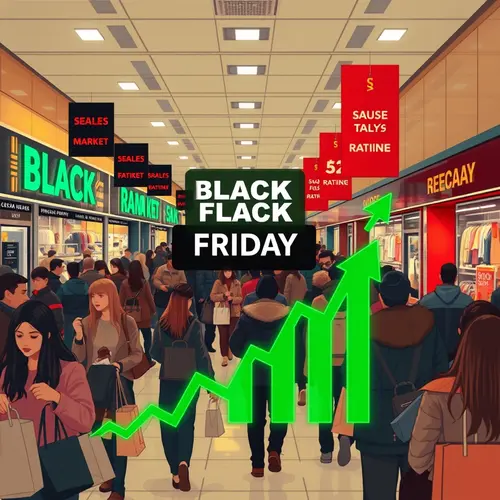
Black friday marketing is the strategic use of promotions, advertising, and customer engagement tactics to capture holiday shoppers during the biggest retail weekend of the year. Effective black friday marketing blends data‑driven targeting, compelling offers, and seamless omnichannel execution to boost conversion rates and average order value.
Core Components of Effective black friday marketing
A successful plan rests on three pillars: audience segmentation, offer design, and channel synchronization.
First, use past purchase data and browsing behavior to create high‑intent segments such as loyalists, cart abandoners, and new prospect look‑alikes.
Second, craft offers that feel exclusive—think tiered discounts, limited‑edition bundles, or early‑access gifts—while protecting margin through careful contribution‑margin analysis. Third, align email, social, paid search, and SMS so each touchpoint reinforces the same message and drives traffic to a optimized landing page.
Together, these elements form the backbone of a scalable black friday marketing approach.
Designing a black friday marketing Calendar That Works
Start the calendar eight weeks out.
Week 8‑6 focuses on teaser content and list building; week 5‑3 shifts to early‑bird offers and countdown timers; week 2‑0 delivers the main push with flash sales, live inventory updates, and post‑purchase upsell prompts.
Embedding a clear send‑frequency cap (no more than three messages per channel per day) prevents fatigue and preserves brand trust.
A well‑structured black friday marketing calendar keeps teams aligned and budgets on track.
Measuring ROI and Optimizing Campaigns
Effective black friday marketing relies on a testing framework to isolate incremental lift.
Run A/B tests on offer depth, creative copy, and send time.
Allocate 10% of the media budget to hold‑out groups.
After the event, perform a cohort analysis to see which segments retained the highest lifetime value.
Feed those insights into the next planning cycle.
Metric
Why It Matters
Target Benchmark (Industry Avg)
Return on Ad Spend (ROAS)
Measures revenue generated per dollar spent on paid media
4:1 or higher
Email Open Rate
Indicates subject‑line relevance and list health
22%‑28%
Cart Abandonment Recovery Rate
Shows effectiveness of reminder sequences
12%‑18%
Average Order Value (AOV)
Reflects success of bundling and upsell tactics
+15% vs. baseline
According to the National Retail Federation, holiday sales consistently represent roughly 20% of annual retail revenue.
A McKinsey study found that brands that personalized promotions based on real‑time inventory data achieved up to 30% higher conversion than those using static offers.
Key actions for a smooth rollout:
Deduplicate customer records and refresh product feeds.
Build a master offer matrix that maps discount levels to inventory risk.
Schedule creative reviews at least 48 hours before each wave.
Monitor real‑time dashboards for ROAS, click‑through, and inventory sell‑through.
Prepare a post‑mortem checklist: what worked, what didn’t, and actionable items for Q1 planning.
Budget Allocation for black friday marketing
Determine the spend split between paid media, email, and owned channels based on historical ROI.
A common rule is to allocate 50% to paid search and social, 30% to email and SMS, and 20% to on‑site personalization tools.
Adjust the mix weekly as performance data comes in, shifting funds toward the highest‑ROAS tactics.
Creative Best Practices for black friday marketing
Use bold visuals and clear value propositions to capture attention in crowded feeds.
Incorporate countdown timers and scarcity cues to create urgency without eroding brand trust.
Test dynamic creative that adapts to user behavior, such as showing recently viewed items with a special badge.
Leveraging User‑Generated Content in black friday marketing
Encourage buyers to share their purchases on social media with a branded hashtag.
Feature the best posts on the site homepage and in email newsletters to build community trust.
Monitor the hashtag feed in real time and reward top contributors with exclusive discounts.
Maintain a dedicated support channel open throughout the weekend to handle inquiries promptly.
Post‑Purchase Engagement in black friday marketing
Send a thank‑you email with a personalized product recommendation within 24 hours of purchase.
Invite buyers to join a loyalty program or leave a review, offering bonus points for early action.
Consider a hypothetical case: a mid‑size home‑goods retailer launched a black friday marketing campaign that combined early‑access loyalty rewards with a 24‑hour “doorbuster” flash sale.
By segmenting its email list into VIP, active, and inactive groups and tailoring the discount depth (20% for VIPs, 15% for actives, 10% with a free‑gift for inactives), the brand saw a 38% increase in weekend revenue compared to the prior year, while maintaining a 22% contribution margin.
The key was aligning inventory allocation with the offer tiers to prevent stock‑outs on high‑margin items.
Keep a crisis communication plan ready to address any shipping delays or inventory issues swiftly. Monitor social sentiment in real time and respond to customer queries within one hour.
Final thoughts: treat black friday marketing as a repeatable system rather than a one‑off sprint. Invest in the foundational layers—data hygiene, offer economics, and channel discipline—year after year, and the returns will compound.
Core Components of Effective black friday marketing
A successful plan rests on three pillars: audience segmentation, offer design, and channel synchronization. First, use past purchase data and browsing behavior to create high‑intent segments such as loyalists, cart abandoners, and new prospect look‑alikes.
Designing a black friday marketing Calendar That Works
Start the calendar eight weeks out. Week 8‑6 focuses on teaser content and list building; week 5‑3 shifts to early‑bird offers and countdown timers; week 2‑0 delivers the main push with flash sales, live inventory updates, and post‑purchase upsell prompts.
Measuring ROI and Optimizing Campaigns
Effective black friday marketing relies on a testing framework to isolate incremental lift. Run A/B tests on offer depth, creative copy, and send time.