When analyzing the modern economy, big retailers function as the critical bridge between global manufacturing and household consumption. These entities dictate shelf space, negotiate trade terms, and set the pricing benchmarks that smaller competitors must follow.
Defining the Landscape of Big Retailers
The classification relies on revenue scale, geographic footprint, and supply chain vertical integration. Companies like Walmart, Amazon, Costco, and Home Depot operate on a scale where procurement decisions shift global commodity markets. According to the National Retail Federation, the top 50 chains account for a disproportionate share of total US retail sales, concentrating immense bargaining power.
Key characteristics separate this tier from mid-market players:
Private Label Dominance: Developing exclusive brands to capture margin and lock in loyalty.
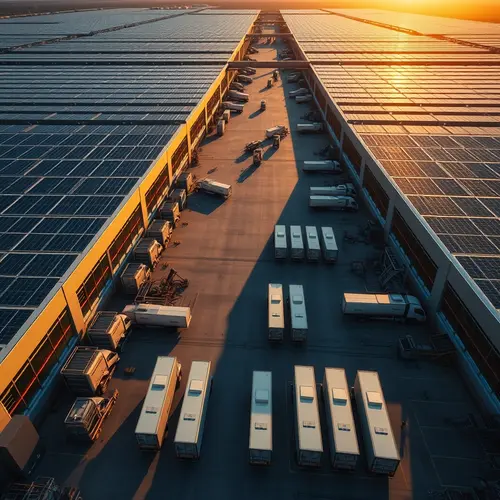
Logistics Ownership: Operating proprietary distribution networks, trucking fleets, and last-mile delivery infrastructure.
Data Monetization: Leveraging first-party shopper data for high-margin advertising businesses (Retail Media Networks).
Financial Mechanics Driving Big Retailers
Unit economics in this sector revolve around inventory turnover and sales per square foot. Unlike software companies, capital intensity is high. Return on Invested Capital (ROIC) is the north star metric. A former CFO of a Fortune 500 chain once told me, “We don’t sell goods; we sell inventory velocity.” This mindset explains the ruthless focus on days sales of inventory (DSI) and cash conversion cycles.
The following Big Retailers – table illustrates the divergent financial models within the sector:
Model Type
Primary Margin Lever
Capital Intensity
Key Risk Factor
Mass Merchandiser (e.g., Walmart)
Volume & Private Label Penetration
High (Real Estate + Fleet)
Wage Pressure & Shrinkage
Membership Club (e.g., Costco)
Membership Fees (High Renewal Rates)
Moderate (SKU Rationalization)
Saturation & Cannibalization
E-commerce Pure Play (e.g., Amazon)
AWS/Ads Subsidizing Retail Ops
Extreme (Fulfillment Centers + Tech)
Regulatory Scrutiny
Category Killer (e.g., Home Depot)
Pro Customer Loyalty & Services
High (Inventory Depth)
Housing Cycle Correlation
Big Retailers Supply Chain Leverage and Vendor Relationships
The power asymmetry between big retailers and Consumer Packaged Goods (CPG) suppliers is structural. Slotting fees, chargebacks for compliance failures, and mandatory marketing fund contributions are standard contract terms. The Robinson-Patman Act historically governed price discrimination, though enforcement has waxed and waned. Today, vendors often accept lower gross margins for the volume access these channels provide.
Expert Insight: The “Vendor Funded Discount” Trap. Many emerging brands celebrate placement in 4,000 stores without modeling the true cost. Between scan-down allowances, defective allowances, and free-fill requirements for new store openings, the effective wholesale price can drop 15-20% below the invoice price. I have seen brands go bankrupt fulfilling a massive purchase order because they financed the inventory at 12% interest while waiting 90 days for payment net of deductions.
Big Retailers Digital Transformation: Omnichannel as Baseline
Buy Online, Pick Up In-Store (BOPIS) and curbside pickup are no longer differentiators; they are table stakes. The strategic battleground has shifted to Retail Media Networks (RMNs). By selling sponsored product placements on their owned digital properties, these chains have built high-margin revenue streams rivaling Google and Meta for product discovery intent. As reported by the Interactive Advertising Bureau, retail media ad spend continues to outpace traditional search growth.
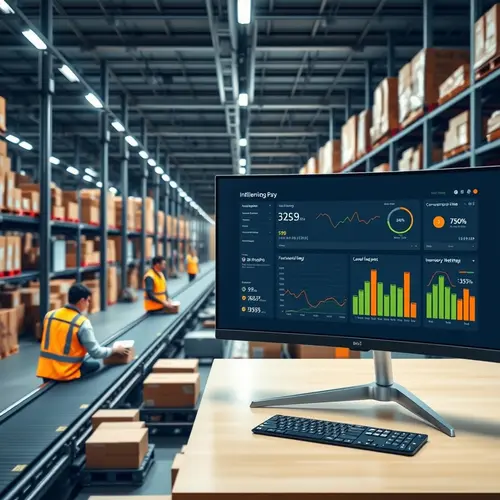
This shift requires a technology stack capable of real-time inventory visibility across thousands of nodes. Legacy mainframes are being replaced by microservices architectures to support unified commerce—single view of customer, single view of inventory, single view of order.
Big Retailers Strategy and Automation
Labor represents the largest controllable expense line. The response is a bifurcated strategy: wage investment for customer-facing roles to reduce turnover costs, and aggressive automation for back-of-house tasks. Autonomous floor scrubbers, robotic palletizers in distribution centers, and AI-driven labor scheduling tools are standard CapEx items. The Bureau of Labor Statistics tracks sector employment as a leading indicator for consumer spending health.
Big Retailers Regulatory and Competitive Outlook
Antitrust focus has intensified. The Federal Trade Commission scrutinizes mergers that reduce local grocery competition and examines self-preferencing practices on marketplace platforms. Private label strategies sit in the crosshairs—regulators question whether a platform operator can fairly compete with third-party sellers while controlling the algorithm and data.
Simultaneously, the rise of value-oriented formats (dollar stores, limited-assortment grocers) compresses the low end. At the premium end, direct-to-consumer brands bypass wholesale entirely. Big retailers are caught in a pincer movement, forcing them to accelerate private label quality tiers and expand service revenue (installation, financial services, healthcare) to defend margins.
Understanding the strategic playbook of big retailers is essential for any stakeholder in the consumer economy, from vendors and investors to policy makers and commercial real estate developers.